
Charcuterie boards are one of my favorite ways to entertain. They look beautiful, they’re easy to customize, and they encourage everyone to slow down, nibble, talk, and enjoy a variety of flavors.
A smaller charcuterie board is especially perfect for two, whether you’re planning an at-home date night, sharing a bottle of wine with a friend, or simply turning appetizers into something a little more special.
I’ve created many charcuterie boards for friends and family over the years, and one thing I’ve learned is that you don’t need dozens of ingredients to make a beautiful board. A thoughtfully chosen selection of cheeses, meats, fruits, crackers, and a few special accompaniments can be more than enough.
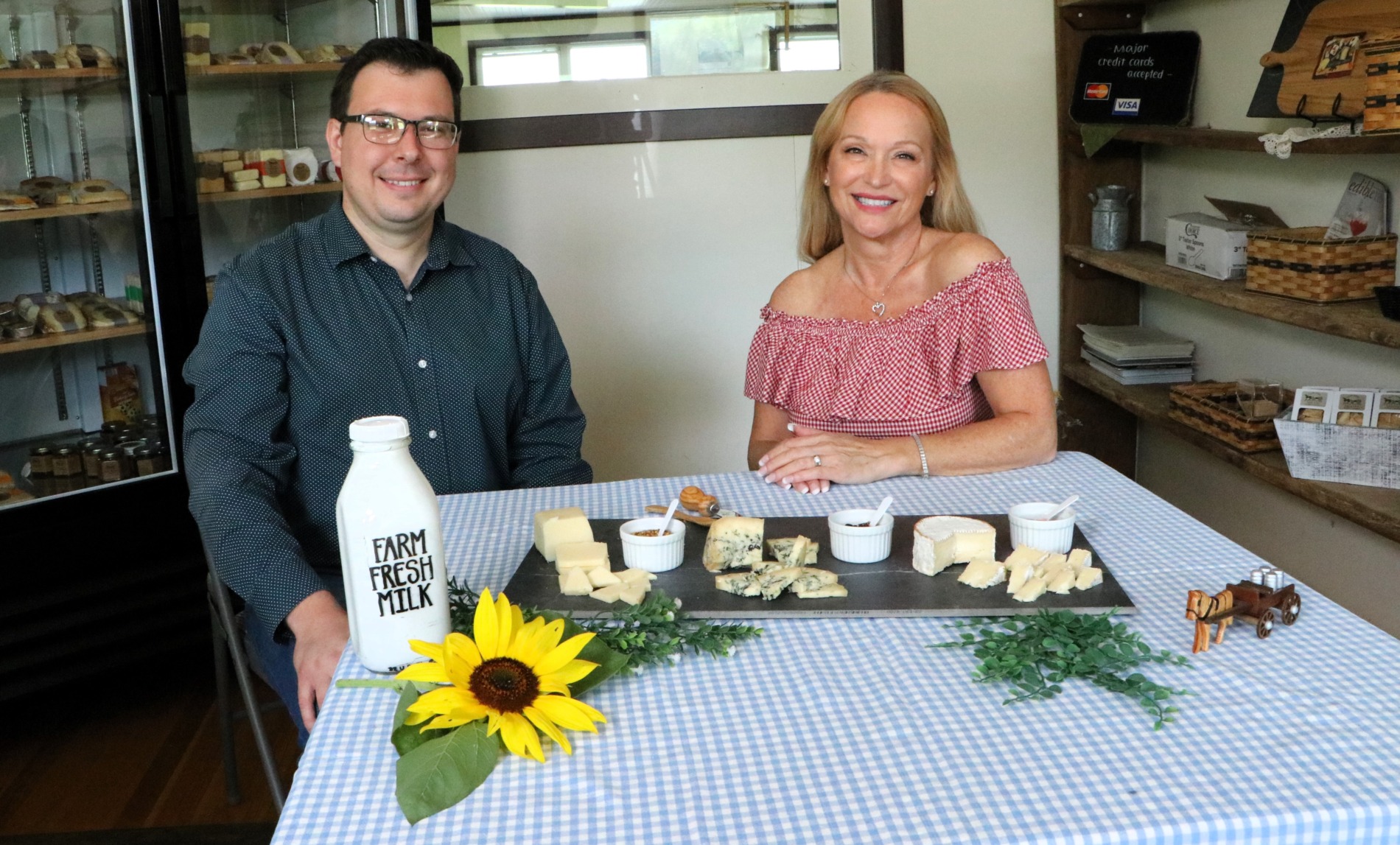
And after learning more about artisan cheese while filming Love Eat Travel with Michelle Valentine in Happy Valley, Pennsylvania, I’ve gained an even greater appreciation for making the cheese itself one of the stars of the board.

What Is a Charcuterie Board?
Traditionally, charcuterie refers to prepared and cured meats, but the charcuterie boards we commonly create at home have expanded considerably.
Today, a board might include:
- Cured meats
- Several cheeses
- Fresh or dried fruit
- Vegetables
- Nuts
- Crackers or bread
- Jams, preserves, honey, or mustard
- Chocolates or other small sweets
There really aren’t rigid rules. The fun is combining different flavors, colors, shapes, and textures into something that looks as inviting as it tastes.
What You’ll Need for a Charcuterie Board for Two
You don’t need an enormous spread when you’re serving just two people.
Start with:
- A selection of two or three meats
- Two or three cheeses
- Fresh or dried fruit
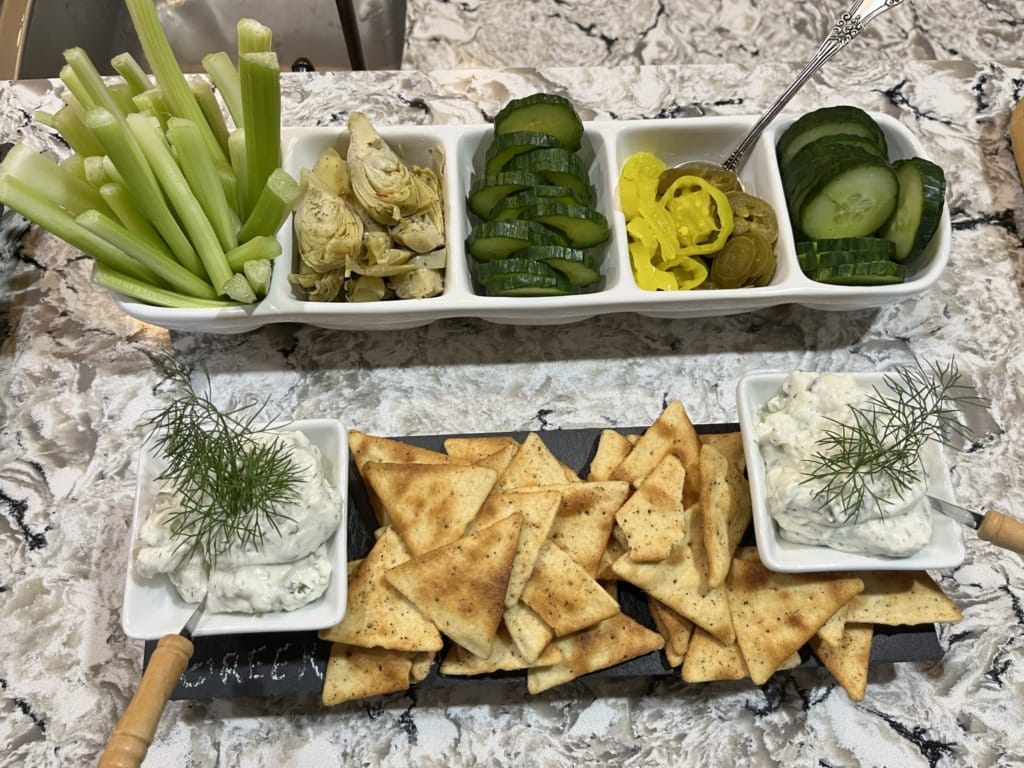
- A few vegetables or savory accompaniments
- Nuts
- Crackers or sliced bread
- One or two spreads, jams, or other condiments
- A wooden cutting board, slate board, or serving platter
- A cheese knife
- Two small plates
Then customize everything according to what you enjoy.
Choosing the Best Meats
For two people, choose a small variety rather than buying too much of everything.
Popular choices include:
- Salami
- Prosciutto
- Soppressata
- Ham
- Smoked turkey
- Pastrami
Try combining meats with different flavors and textures. You might choose one mild option, one smoky selection, and something a little more boldly seasoned.
Arrange them in folds, loose piles, or fan shapes instead of laying everything completely flat. That immediately gives your board more visual interest.
Make the Cheese the Star
Cheese can completely change the personality of a charcuterie board.
I like choosing cheeses with different textures and flavor profiles rather than several varieties that taste similar.
Consider combining:
- A soft cheese such as brie
- A tangier cheese such as goat cheese
- An aged cheddar
- Gouda
- Another artisan or regional cheese you’ve discovered while traveling
A mix of creamy, firm, mild, sharp, and aged cheeses makes every bite a little different.
What Filming in Happy Valley Taught Me About Artisan Cheese
One of my favorite food experiences while filming Season 1 of Love Eat Travel with Michelle Valentine took place at Goot Essa in Happy Valley, Pennsylvania.
There, I had the opportunity to learn more about traditional cheese making on an Amish farm and see firsthand the care that goes into artisan cheese.
Experiences like this are one of the reasons I love exploring food while traveling. A piece of cheese on a board may look simple, but there can be an entire story behind it: the milk, the people producing it, the methods they use, the aging process, and traditions passed down through generations.
It also changed the way I think about building a charcuterie board.
Instead of treating cheese as just another ingredient, consider choosing at least one cheese with a story. It might come from a local cheesemaker, a family farm, a destination you’ve visited, or simply a style of cheese you’ve never tried before.
That’s what transforms a board from a collection of snacks into a tasting experience.
You can discover more of my food and travel experiences from filming in Happy Valley, Pennsylvania.
Add Fruits, Vegetables, and Something Sweet
Once the meats and cheeses are selected, it’s time to add contrast.
Fresh fruit brings sweetness and color. Some of my favorites include:
- Apples
- Pears
- Grapes
- Fresh figs
Dried fruit works beautifully too.
For savory additions, try:
- Olives
- Pickles
- Roasted red peppers
- Artichoke hearts
- Sun-dried tomatoes
Then add something sweet.
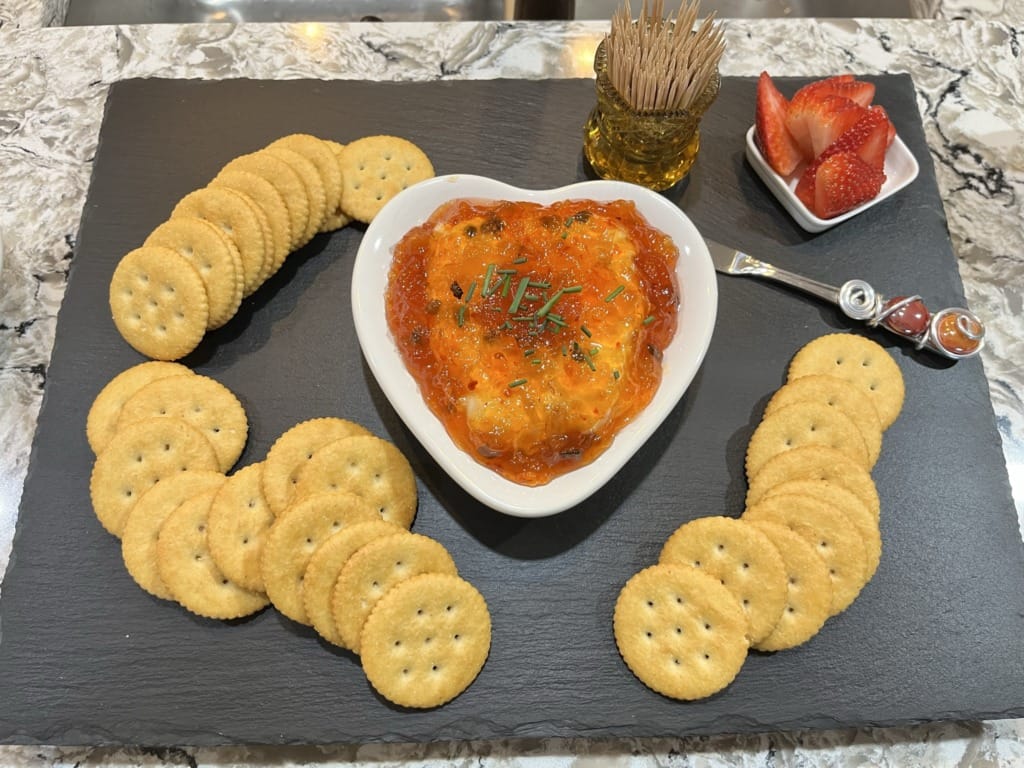
A small spoonful of jam or preserves beside a flavorful cheese can create an entirely different tasting experience. Honey is another easy addition, especially with softer cheeses.
Chocolate, candied nuts, or another small treat can finish the board nicely.
Don’t Forget the Crackers
Choose crackers that won’t overwhelm your cheeses and other ingredients.
I like having at least two varieties so there is some difference in texture and flavor.
Options could include:
- Water crackers
- Wheat crackers
- Flatbread crackers
- Bagel chips
- Lavash
- Small slices of baguette
You don’t need to cover the board with crackers. Place a few on the board and keep extras nearby so you can replenish them.
 Start With a Beautiful Board or Platter
You don’t need a special charcuterie board to make an attractive presentation.
I’ve used wooden boards, slate boards, serving platters, and pieces from my own collection of entertaining dishes.
Some of my favorite boards were gifts from friends and family. I have bamboo boards, slate boards that can be labeled with chalk, and larger sets containing drawers for cheese knives and serving accessories.
Use what you already have.
The food should remain the focus.
How to Arrange Your Charcuterie Board
Begin with your largest items.
Place the cheeses around the board first rather than clustering them all together.
Next, add your meats.
Fold or loosely pile slices to create height and texture.
Then place small bowls or dishes containing anything wet or messy, such as olives, jam, honey, mustard, or pickles.
Fill the remaining spaces with:
- Fruit
- Vegetables
- Crackers
- Nuts
- Chocolates
Don’t worry about making the two sides perfectly symmetrical. A charcuterie board usually looks more inviting when it feels abundant but relaxed.
Let Guests Cut Some of the Cheese Themselves
I often like placing part of a block or wedge of cheese directly onto the board.
You can cut several pieces in advance, then leave the remaining cheese intact with a cheese knife nearby.
That gives guests an easy starting point without having every single piece sliced ahead of time.
It also creates a more interesting presentation than a board covered entirely with uniform slices.
 Use Fresh, Seasonal Ingredients
Whenever possible, use fruits and other ingredients that are in season.
They’re usually more flavorful, and seasonal colors can make the board especially attractive.
You can even let the season inspire the entire presentation.
Summer might mean berries and fresh fruit.
Autumn could bring apples, pears, nuts, and darker cheeses.
Around the holidays, dried cranberries, rosemary, chocolates, and festive preserves can give the board an entirely different appearance.
Add the Finishing Touches
Once everything is arranged, look for empty spaces.
Small gaps can be filled with:
- Nuts
- Berries
- Dried fruit
- Chocolates
- Fresh herbs
A little greenery can also make the board look polished, but be sure anything touching the food is clean and food-safe.
Then place your plates, napkins, and serving utensils nearby.
Your Charcuterie Board Doesn’t Have to Be Perfect
The best part of creating a charcuterie board is that every one can be different.
Experiment with new cheeses.
Try an unusual jam.
Bring home something from a local producer you’ve discovered during your travels.
Mix familiar favorites with one ingredient you’ve never tasted before.
That’s part of what I came to appreciate even more while filming in Happy Valley: food is more interesting when we understand something about where it comes from and the people who make it.
Whether you’re creating a board for a date night, entertaining a friend, or simply treating yourself, make it personal.
Then pour something you enjoy, sit down, and savor it.




Leave A Comment