

Spooky costumes, glowing jack-o’-lanterns, candy, and a little playful fright: Halloween is one of America’s most beloved fall celebrations. But behind the masks and treats is a long, fascinating history shaped by ancient seasonal festivals, Christian observances, folklore, immigration, and modern community traditions.
Halloween did not come from one single source. Instead, it evolved over centuries, gathering stories and customs along the way.
Where it began: Samhain and the Celtic calendar
More than 2,000 years ago, Celtic-speaking communities in areas that are now Ireland, Scotland, and parts of Britain marked the transition from harvest season to winter with Samhain, traditionally observed around November 1.
Samhain represented an important seasonal turning point, as the lighter half of the year gave way to winter. Later folklore connected this time of year with spirits and the supernatural, helping create some of the eerie associations we now connect with Halloween.
While it is tempting to see every modern Halloween tradition as a direct survival of Samhain, the real history is more layered. Halloween developed through a mixture of ancient customs, religious observances, local folklore, and newer traditions.
All Hallows’ Eve and the Christian calendar
By the early Middle Ages, November 1 was observed in Western Christianity as All Saints’ Day, a day honoring saints and martyrs. November 2 later became All Souls’ Day, a day of prayer and remembrance for the dead.
The evening before All Saints’ Day became known as All Hallows’ Eve. Over time, the name was shortened to Halloween.
In many places, the season included church observances, candlelight, prayers for the departed, and community gatherings. As these customs developed alongside older seasonal folklore, Halloween became a holiday with both sacred and playful traditions.
Souling, guising, and costumes
Several customs from the British Isles helped shape familiar parts of Halloween.
During “souling,” people visited homes around All Hallows’ Eve and All Souls’ Day, receiving small cakes or food in exchange for prayers for the dead. Another tradition, often associated with Scotland and Ireland, was “guising,” in which children dressed in costume and offered a song, joke, poem, or small performance in return for treats.
Costumes and masks also became part of seasonal celebrations. In earlier times, they could be connected to folklore, games, and ideas about the supernatural. Today, dressing up is simply one of Halloween’s most joyful traditions.
The story behind the jack-o’-lantern
One of Halloween’s most recognizable symbols began with lanterns carved from turnips and other root vegetables in parts of Ireland and Scotland.
Irish folklore tells the story of Stingy Jack, a clever trickster said to have outwitted the Devil. According to the legend, Jack was left to wander with only a burning coal inside a carved turnip to light his way. The tale helped inspire the name “jack-o’-lantern.”
When Irish immigrants brought these traditions to North America, pumpkins became the natural choice. They were plentiful, large, and much easier to carve than turnips. The glowing pumpkin jack-o’-lantern quickly became an American Halloween classic.
How trick-or-treating became an American tradition
Modern trick-or-treating developed in the United States during the early 20th century, drawing inspiration from earlier customs such as souling and guising.
Halloween celebrations were already popular, but communities also wanted to encourage a safer, friendlier alternative to the pranks sometimes associated with the holiday. Costume parties, neighborhood events, and door-to-door visits gradually became more common.
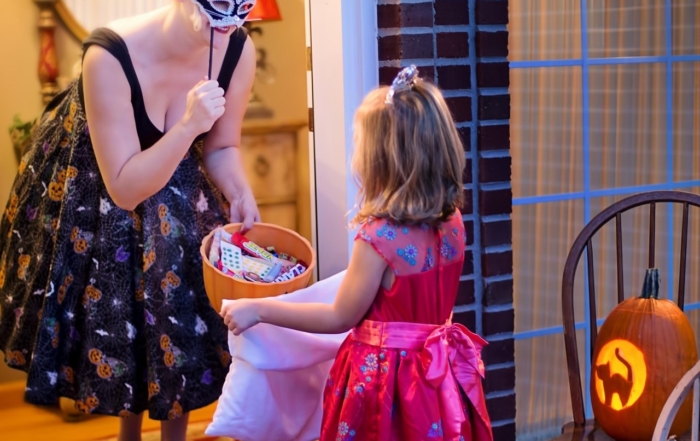
By the mid-20th century, trick-or-treating had become a familiar family tradition in communities across the country. Children dressed in costume, visited neighbors, and received candy in exchange for a cheerful “Trick or treat!”
A holiday that continues to change
Halloween has worn many forms over the centuries. It has been a harvest-season marker, a time of religious remembrance, an occasion for folklore and storytelling, and now a celebration of imagination, community, and fun.
Today, Halloween may mean carving pumpkins, decorating the front porch, attending a fall festival, watching a spooky movie, hosting a costume party, or taking children trick-or-treating. The traditions continue to evolve, but their appeal remains timeless: a little mystery, a little make-believe, and a wonderful reason to celebrate the season.
So next time you light a jack-o’-lantern or slip into a costume, remember that you are taking part in a story that has traveled through centuries, cultures, and generations.
Happy Halloween!


Leave A Comment