
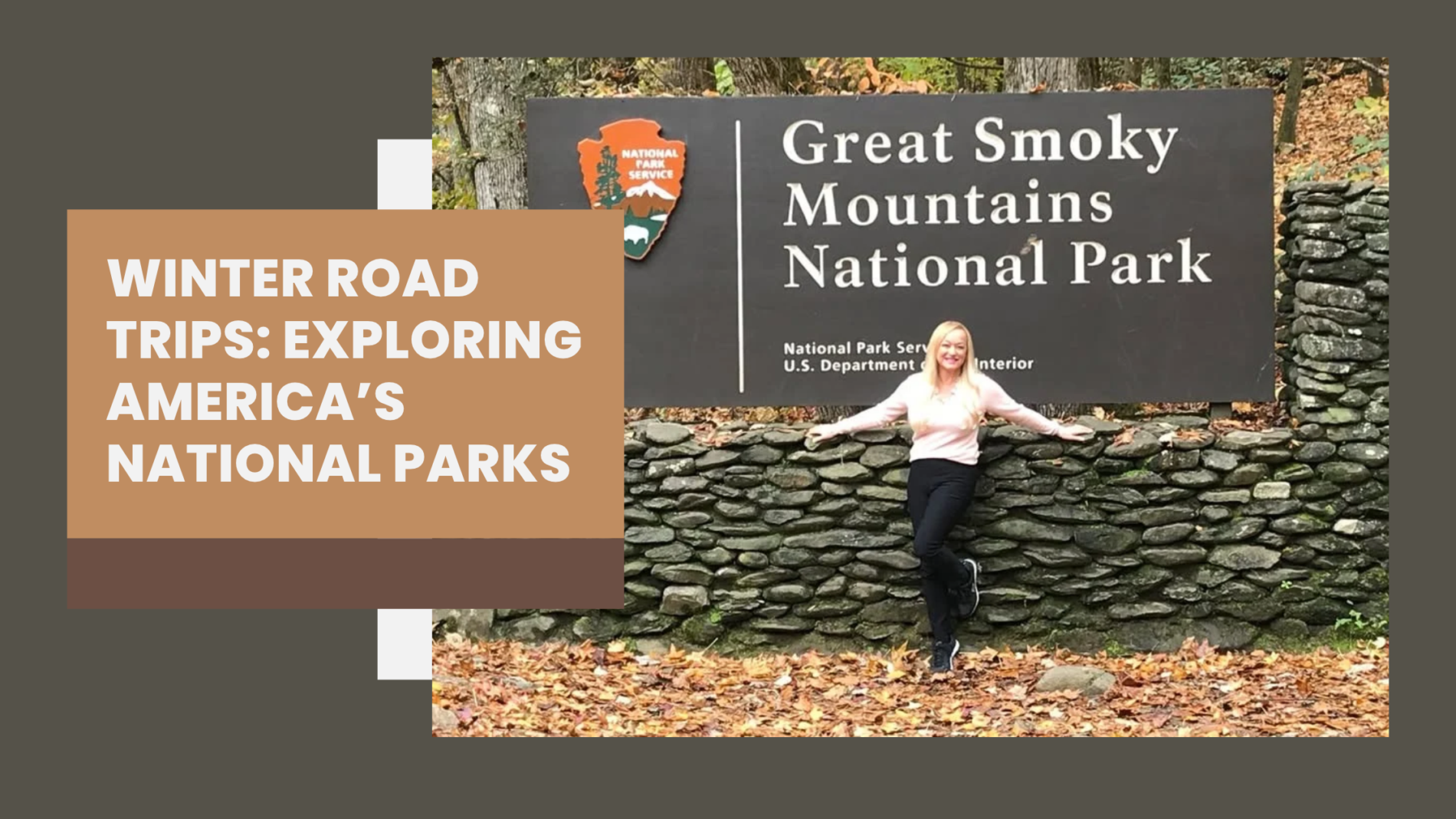
Baby, it may be cold outside, but the open road still calls. Winter road trips offer a completely different way to experience America’s national parks: snow-capped mountains, quiet trails, dramatic rock formations dusted in white, and the kind of scenery that makes you want to pull over just to take it all in.
From the misty ridges of the Great Smoky Mountains to the red rocks of Utah and the towering sequoias of California, these parks make for an unforgettable winter escape. Pack warm layers, check road and trail conditions before leaving, keep your gas tank full, and give yourself extra time to enjoy the journey.
Here are a few beautiful national parks to add to your winter road-trip list.
Note: Winter travel conditions can change quickly. Before your trip, visit each park’s official website for current road closures, weather alerts, tire-chain requirements, entrance information, and trail conditions.
Great Smoky Mountains National Park: Misty Ridges and Mountain Views
Great Smoky Mountains National Park, which stretches across Tennessee and North Carolina, is one of those places that feels special in every season. Winter brings a quieter side of the park, with fewer crowds, bare trees revealing long-range mountain views, and the possibility of snow at higher elevations.
The park’s famous “smoky” haze can be especially striking on a cold morning, when mist rolls through the valleys and settles between the ridgelines. It is a beautiful place to begin a road trip through America’s natural landscapes.
Things to do:
- Take a scenic drive through Cades Cove when road conditions allow.
- Stop at overlooks along Newfound Gap Road for sweeping mountain views.
- Visit historic cabins, churches, and barns throughout Cades Cove.
- Enjoy a winter hike on lower-elevation trails, where conditions may be more manageable.
- Watch for wildlife from a safe distance, especially deer, turkeys, and black bears.
Grand Teton National Park: A Majestic Winter Kickoff
In Wyoming, Grand Teton National Park is breathtaking beneath a blanket of snow. The dramatic peaks rise sharply above the valley, creating one of the most recognizable mountain landscapes in America.
Winter here is ideal for travelers who love photography, peaceful scenery, and outdoor adventure. The park feels quieter and more remote than it does during the busy summer season.
Things to do:
- Photograph the snow-covered Teton Range from scenic viewpoints.
- Enjoy cross-country skiing or snowshoeing in designated areas.
- Look for moose, elk, and other wildlife from your vehicle or a safe viewing distance.
- Warm up afterward in nearby Jackson, Wyoming, with a cozy meal or hot chocolate.
Yellowstone National Park: Geysers, Bison, and Frozen Marvels
Yellowstone National Park spans Wyoming, Montana, and Idaho, and winter gives this famous park an almost otherworldly feeling. Steam rises from geothermal features into the icy air, bison move through snowy fields, and the landscape becomes a beautiful contrast of white snow, blue skies, and mineral-colored hot springs.
Winter access is more limited than in summer, so advance planning is essential. But for travelers willing to plan ahead, Yellowstone can be one of the most memorable winter national-park experiences in the country.
Things to do:
- See steaming geothermal features surrounded by snow.
- Watch bison and other wildlife from a respectful distance.
- Consider a guided snowcoach or snowmobile tour where available.
- Photograph the park’s frozen waterfalls, rivers, and snowy landscapes.
- Check current entrance, road, and tour availability before your trip.
Yosemite National Park: Snowy Sequoias and Waterfall Views
Yosemite National Park in California is beautiful year-round, but winter brings a softer, quieter kind of magic. Granite cliffs tower above the valley, waterfalls continue to flow, and snow can transform the park’s meadows, forests, and famous viewpoints.
Even if you are not looking for a strenuous outdoor adventure, Yosemite offers scenic drives and unforgettable views that make it well worth the trip.
Things to do:
- Admire Yosemite Valley beneath a fresh layer of snow.
- Photograph Bridalveil Fall and other waterfalls.
- See giant sequoias in the Mariposa Grove when access allows.
- Go snowshoeing or skiing in designated areas.
- Enjoy the park’s famous views of El Capitan and Half Dome.
Arches National Park: Red Rock Beauty in Winter
Arches National Park in Utah takes on a completely different personality in winter. The contrast between rust-colored sandstone and fresh white snow can be spectacular, especially for photographers.
Winter temperatures can be cold, but the season often brings a little more breathing room on the park’s popular trails and scenic overlooks.
Things to do:
- Visit Delicate Arch, one of the park’s most iconic sights.
- Photograph arches and balanced rocks against snowy red-rock scenery.
- Take short hikes when trails are safe and conditions permit.
- Watch the sunset over the sandstone landscape.
- Stay after dark for stargazing on a clear winter night.
Rocky Mountain National Park: Snowy Peaks and Cozy Mountain Towns
Colorado’s Rocky Mountain National Park is a classic winter destination for travelers who enjoy mountain scenery, wildlife, and the cozy feeling of a nearby mountain town.
Some park roads close seasonally, but accessible areas still offer plenty of opportunities to enjoy snow-covered peaks and peaceful alpine landscapes.
Things to do:
- Take a scenic drive on open park roads.
- Go sledding, snowshoeing, or cross-country skiing in appropriate areas.
- Look for elk and mule deer.
- Visit nearby Estes Park for restaurants, shops, and a warm place to relax.
- Enjoy a peaceful winter picnic with mountain views.
Zion National Park: A Winter Symphony of Canyons and Snow
Zion National Park in Utah is known for its towering canyon walls and dramatic red-rock landscapes. In winter, a dusting of snow adds another layer of beauty, creating an extraordinary contrast against the deep rust and orange colors of the cliffs.
The cooler temperatures can make certain hikes more comfortable than they are during the heat of summer, although icy conditions should always be taken seriously.
Things to do:
- Ride the park shuttle when it is operating.
- Explore scenic viewpoints and short walks.
- Photograph snow-tipped canyon walls.
- Hike only on trails that are open and appropriate for current conditions.
- Visit Springdale for a warm meal after a day in the park.
Sequoia and Kings Canyon National Parks: Giants in a Snowy Kingdom
A winter road trip through Sequoia and Kings Canyon National Parks in California feels like stepping into a storybook. The giant sequoias stand tall above the snow, their enormous trunks and branches creating a landscape unlike anywhere else.
Seeing the General Sherman Tree surrounded by a snowy forest is an especially memorable way to end a national-parks road trip.
Things to do:
- Visit the General Sherman Tree when access allows.
- Walk among the giant sequoias.
- Take photographs of the snow-covered forest.
- Enjoy snowshoeing or winter walks in designated areas.
- Check tire-chain requirements and road conditions before entering the park.
The End of the Road, for Now
A winter road trip through America’s national parks is not about rushing from one stop to the next. It is about slowing down, embracing the season, and seeing familiar landscapes in a completely new way.
Whether you are standing beneath the misty peaks of the Great Smoky Mountains, watching bison move through Yellowstone snow, or marveling at red rocks dusted in white at Arches, these parks remind us that adventure does not end when summer does.
So grab your coat, fill up the car, bring a warm drink for the road, and let winter lead you somewhere beautiful.




Leave A Comment