

Millions of years before we started packing suitcases and traveling the world, some pretty extraordinary creatures were already roaming, swimming, and flying across it.
Today, their fossils give us an incredible glimpse into prehistoric life.
I’ve always found fossils fascinating, but there’s a big difference between looking at a fossil through museum glass and actually searching for one yourself.
I’ve now had the opportunity to do that in two very different parts of Florida while filming Love Eat Travel with Michelle Valentine.
In SouthShore, Florida, I dug for fossils at Paleo Preserve Fossil Museum. Later, while filming Season 2 on Amelia Island, I searched the shoreline for prehistoric shark teeth near Fort Clinch.
Those experiences made me appreciate just how much prehistoric history can be hiding beneath our feet, sometimes in places where we’d least expect it.
From enormous dinosaur skeletons in world-famous museums to hands-on fossil adventures and shark-tooth hunting on Florida beaches, here are some fascinating places to discover dinosaur bones and prehistoric fossils.
Paleo Preserve Fossil Museum in Ruskin, Florida
You probably don’t think of Florida when you think about prehistoric fossils.
I certainly didn’t expect a fossil adventure to become one of the most memorable experiences we filmed in SouthShore.
But Florida has an incredible prehistoric story.
Long before today’s beaches, waterfront communities, and palm trees, this region looked very different and was home to prehistoric animals whose remains can still be found today.
During our SouthShore filming, I visited Paleo Preserve Fossil Museum in Ruskin to learn more about that ancient past.
And then I got to go digging.
My Florida Fossil-Digging Adventure
After exploring the museum, I headed outside for a hands-on fossil-digging experience.
There’s something surprisingly exciting about searching through material and suddenly spotting something that has been hidden for an almost unimaginable amount of time.
I found shark teeth, shells, and other fossils as I searched.
Holding something in your hand that came from an animal or environment that existed millions of years ago gives you a completely different appreciation for natural history.
It’s no longer an abstract period on a museum timeline.
You’re holding a piece of it.
For me, that hands-on experience was what made Paleo Preserve particularly memorable.
Want to see my fossil-digging adventure for yourself? Watch me search for prehistoric treasures at Paleo Preserve Fossil Museum in the SouthShore, Florida episode of Love Eat Travel with Michelle Valentine. From uncovering shark teeth and ancient fossils to exploring the museum’s fascinating collection, you can experience the adventure right along with me.
Watch my SouthShore, Florida episode and discover more of the places we explored.
Discovering Florida Before Florida
Florida’s prehistoric story is especially fascinating because the landscape and animals changed dramatically over millions of years.
The fossils found throughout the state help tell stories about ancient marine environments and the creatures that once inhabited this part of the world.
That’s one of the things I enjoyed most about visiting Paleo Preserve.
We tend to associate Florida with its modern wildlife, especially manatees, alligators, dolphins, sea turtles, and shorebirds.
A fossil experience adds another layer.
It lets you imagine the Florida that existed long before any of us arrived.
Shark Tooth Hunting on Amelia Island, Florida
My fossil adventures in Florida didn’t end in SouthShore.
While filming Season 2 of Love Eat Travel with Michelle Valentine on Amelia Island, I had another opportunity to search for prehistoric treasures, this time along the coast near historic Fort Clinch.
Instead of digging through sediment at a fossil museum, I was walking the beach and searching for shark teeth.
That made this experience completely different.
There’s something about looking down at an ordinary stretch of sand and realizing that a tiny dark shape among the shells could actually be a shark tooth from long ago. Once you know what you’re looking for, every few steps suddenly feels like another chance to discover something.
Searching for Shark Teeth Near Fort Clinch
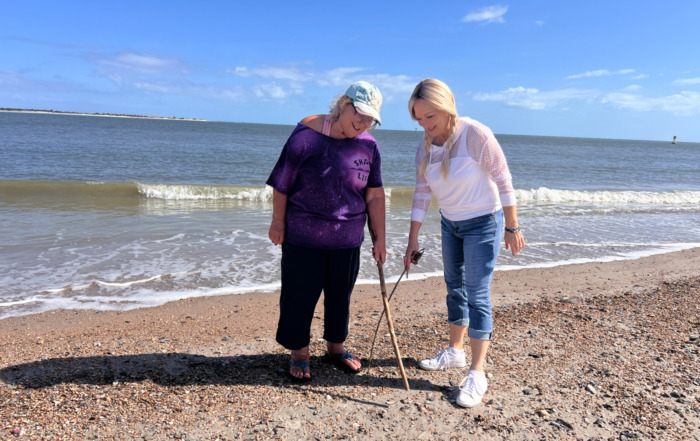
During our Amelia Island filming, I joined Shark Tooth Adventures for a guided search near Fort Clinch.
Having someone show me what to look for made me realize how easily I could have walked right past a shark tooth without recognizing it.
And that’s part of what makes fossil hunting so much fun. You don’t necessarily need to be standing inside a museum or looking at an enormous dinosaur skeleton to connect with prehistoric life.
Sometimes you’re simply walking along a Florida beach, looking through sand and shells.
My experiences in SouthShore and Amelia Island also showed me two very different ways to go fossil hunting in Florida.
At Paleo Preserve, I was actively digging and sifting through material in search of fossils. On Amelia Island, the adventure was about exploring the shoreline and learning how to spot shark teeth among everything along the beach.
Both gave me that same little thrill of discovery.
Explore my Amelia Island, Florida episode of Love Eat Travel with Michelle Valentine.
Dinosaur National Monument in Colorado and Utah
If dinosaurs are what first sparked your interest in fossils, Dinosaur National Monument belongs on your list.
The monument straddles the Colorado-Utah border and preserves an extraordinary concentration of dinosaur fossils.
One of its most famous attractions is the Quarry Exhibit Hall, where visitors can see dinosaur fossils embedded directly in the rock.
That’s what makes this experience particularly interesting.
Instead of seeing every fossil removed from its original surroundings and mounted inside a traditional museum, you can actually see dinosaur bones within the rock where they were preserved.
The monument also offers spectacular landscapes, hiking, scenic drives, and opportunities to explore the geology surrounding this important fossil site.
The Badlands of South Dakota
South Dakota is another extraordinary destination for travelers interested in prehistoric life.
Badlands National Park is famous for its dramatic landscape of eroded formations, but those formations also preserve an important fossil record.
The fossils here aren’t simply about dinosaurs.
The area is particularly significant for fossils of ancient mammals that lived millions of years ago.
That makes the Badlands a great example of why prehistoric travel becomes much more interesting when you look beyond dinosaurs alone.
Visitors can explore the park’s landscapes while learning about the animals and environments that existed here long before humans arrived.
And if you happen to spot a fossil while exploring, leave it exactly where it is and report it to park staff.
The Morrison Formation in the American West
Some fossil destinations aren’t contained within one museum or park.
The Morrison Formation stretches across a large portion of the western United States and is one of North America’s most important sources of dinosaur fossils.
Rock from the formation can be found across states including Colorado, Utah, Wyoming, and Montana.
It has produced fossils from some of the most recognizable dinosaurs associated with the Late Jurassic Period.
For travelers, that means numerous museums, fossil sites, parks, and dinosaur attractions throughout the West can trace parts of their prehistoric stories back to this enormous geological formation.
It’s a reminder that the landscapes we drive through today can contain evidence of worlds that existed millions of years before us.
American Museum of Natural History in New York City
If you want the classic big-city dinosaur experience, New York City’s American Museum of Natural History is difficult to beat.
Its fossil halls contain an extraordinary collection of dinosaur and prehistoric-animal specimens.
This is the kind of museum where the scale of prehistoric life really sinks in.
Standing beside an enormous mounted skeleton gives you a much better sense of just how large some of these creatures were than seeing them on a television screen or in a book.
And because the museum covers so much more than dinosaurs, it’s possible to place those animals into the much larger story of life on Earth.
Field Museum in Chicago
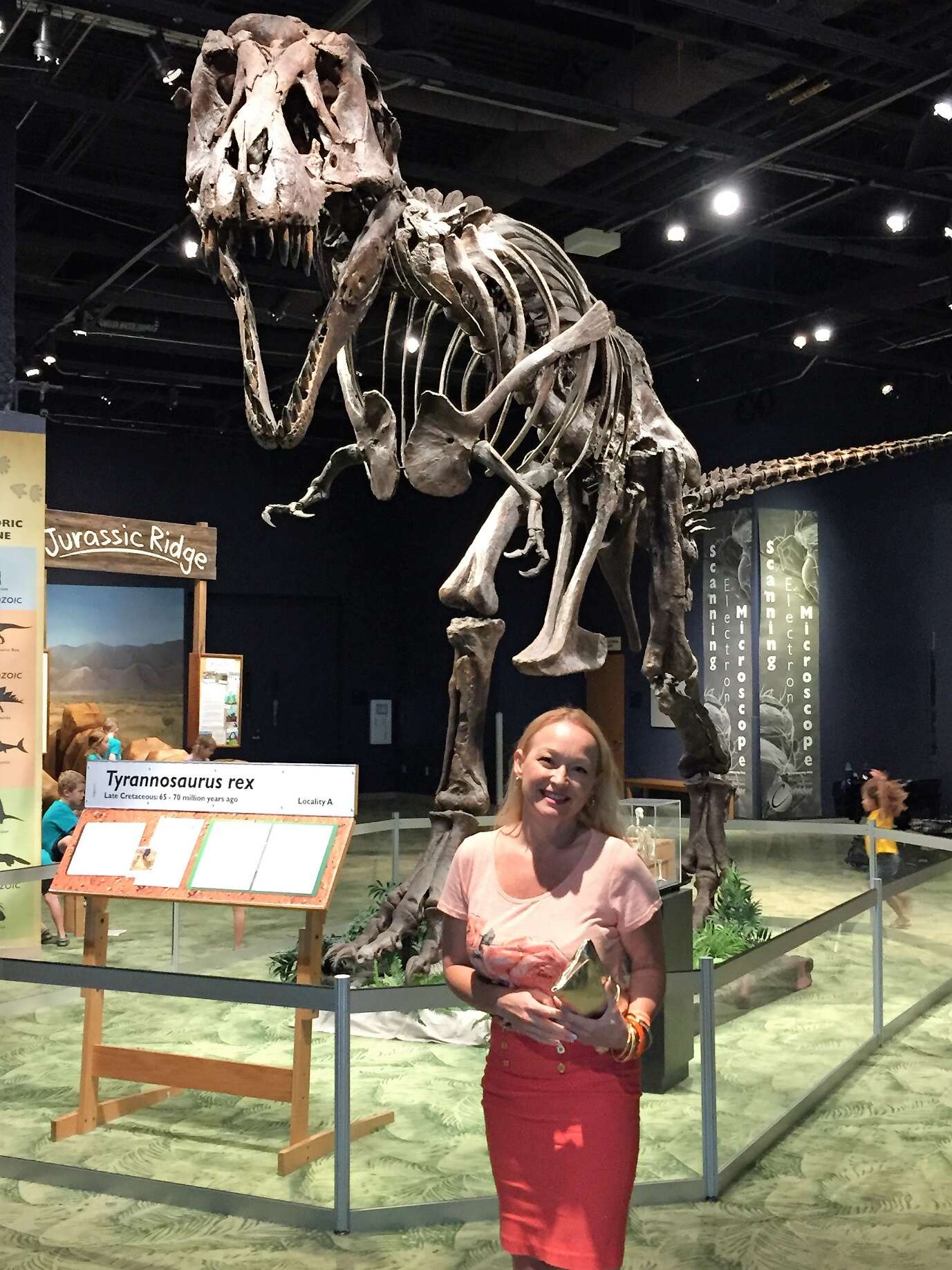
Chicago’s Field Museum is home to one of the world’s most famous fossil specimens: SUE the T. rex.
Even if you aren’t someone who normally plans vacations around fossils, standing near a Tyrannosaurus rex tends to get your attention.
The museum’s fossil and natural-history collections provide visitors with an opportunity to explore prehistoric life while learning how scientists use fossils to understand extinct species and changing environments.
It’s also an excellent example of how a major natural-history museum can make paleontology accessible to visitors of almost any age.
Natural History Museum in London
London’s Natural History Museum is another spectacular destination for anyone fascinated by dinosaurs and prehistoric life.
The museum’s collections encompass fossils, dinosaurs, human evolution, geology, and the natural world.
Part of what makes museums like this so valuable is the opportunity to see specimens from different parts of the world in one place.
You can move through millions of years of natural history without leaving the building.
And the museum itself is magnificent.
Even before you begin exploring the collections, the architecture makes arriving feel like an event.
Royal Tyrrell Museum in Alberta, Canada
If paleontology is the primary purpose of your trip, Canada’s Royal Tyrrell Museum deserves serious consideration.
Located in Alberta’s badlands, the museum is dedicated to paleontology and surrounded by a landscape famous for fossil discoveries.
That combination is particularly appealing.
You aren’t simply walking through a museum filled with prehistoric specimens. You’re visiting a region where paleontological discoveries are part of the landscape itself.
The museum’s exhibits explore dinosaurs, fossils, prehistoric ecosystems, and the scientific work involved in understanding ancient life.
The Gobi Desert in Mongolia
For serious dinosaur enthusiasts, few destinations have the mystique of Mongolia’s Gobi Desert.
Some extraordinary dinosaur discoveries have been made in this vast region, making it one of the world’s legendary paleontological landscapes.
This obviously isn’t the same type of experience as walking into a museum for an afternoon.
Traveling into the Gobi requires considerably more planning, and visitors interested in fossil and paleontology experiences should use legitimate guides and follow local laws protecting fossil resources.
But the idea of standing in a landscape where important dinosaur discoveries have been made is pretty extraordinary.
It’s one of those destinations that reminds you paleontology isn’t confined to museum halls.
The discoveries begin out in the landscape.
Museum, Fossil Dig or Beach Hunt: Which Is Better?
I don’t think you have to choose.
They offer completely different experiences.
Major natural-history museums allow you to see extraordinary specimens that most of us could never encounter otherwise. You can stand beneath enormous skeletons, compare species, read scientific explanations, and see fossils collected from around the world.
A hands-on fossil experience gives you something else.
Discovery.
That’s what surprised me at Paleo Preserve, and I experienced that feeling again while searching for shark teeth on Amelia Island.
Finding a little shark tooth obviously isn’t the same as standing beside a towering dinosaur skeleton.
But there’s something incredibly exciting about realizing that the little object you’ve just uncovered or spotted among the sand and shells isn’t simply a rock.
It’s a piece of prehistoric history.
At Paleo Preserve, I experienced the anticipation of digging and sifting through material to see what I could uncover.
On Amelia Island, I discovered how much fun it can be to walk a beach with your eyes trained on the sand, wondering whether the next little dark shape might be a shark tooth.
The experiences are different, but both make millions of years of natural history suddenly feel much less abstract.
Fossil Hunting Comes With Responsibilities
If your travels take you somewhere fossils can be found, don’t assume you’re allowed to collect them.
Rules vary enormously depending on the location, land ownership, type of fossil, and local or national laws.
National parks and other protected lands can have strict rules against removing fossils and other natural objects.
That’s another advantage of participating in an organized fossil experience.
You can learn how to search responsibly and understand what you are looking at without damaging an important site or accidentally taking something you aren’t permitted to remove.
When in doubt, leave it where you found it and ask. The same respect for the environment applies wherever we explore, from hiking trails to beaches and fossil sites. Learn more about Leave No Trace principles and responsible outdoor travel.
Why Fossil Experiences Are Great for Families
Fossils have an almost magical ability to make science interesting.
Tell a child they’re going to study geology and you may get one reaction.
Tell them they’re going to hunt for prehistoric shark teeth and you may get another.
Hands-on experiences can introduce children to geology, biology, evolution, changing environments, and natural history without feeling like a classroom lesson.
Adults aren’t immune to the excitement, either.
I certainly wasn’t.
There’s something inherently fun about searching for something hidden.
And when that hidden object is millions of years old, it’s even better.
Discover SouthShore, Florida’s Prehistoric Side
My fossil-digging adventure at Paleo Preserve was one of several unexpected experiences I discovered while filming the SouthShore, Florida episode of Love Eat Travel with Michelle Valentine.
During the same journey, I watched wild Florida manatees gather at Tampa Electric’s Manatee Viewing Center, returned to Elmira’s Wildlife Sanctuary, enjoyed waterfront dining, and explored the area’s unusual history.
That’s one of the things I found so interesting about SouthShore.
You can experience modern Florida wildlife and then turn around and start uncovering evidence of the creatures that inhabited this region millions of years ago.
Discover more from my SouthShore, Florida episode of Love Eat Travel with Michelle Valentine.
Discover Amelia Island Beyond the Beach
Searching for shark teeth was also only one part of what I experienced while filming our Amelia Island episode of Love Eat Travel with Michelle Valentine.
The island gave us an opportunity to explore Florida from another perspective, combining its coastal environment with history, local traditions, food, and adventures on and around the water.
And that’s one of the reasons the shark-tooth hunt fit Amelia Island so well.
A walk along the beach wasn’t simply about enjoying the coastline. Looking for prehistoric shark teeth gave me another reason to pay attention to what was right beneath my feet.
Discover more from my Amelia Island, Florida episode of Love Eat Travel with Michelle Valentine.
Prehistoric Travel Makes You Look at the World Differently
Once you start learning about fossils, ordinary landscapes become much more interesting.
A desert isn’t simply a desert.
A rock formation isn’t simply a rock.
And a Florida beach isn’t simply sand, shells and palm trees.
There are stories beneath all of them.
Visiting great fossil museums lets us see what scientists have uncovered.
Going fossil digging or hunting for shark teeth gives us the opportunity to experience a tiny part of that sense of discovery ourselves.
After searching for fossils in SouthShore and hunting for shark teeth along Amelia Island’s coast, I understand the appeal even more.
Whether you’re digging through ancient sediment or simply walking along a beach, you never know what piece of prehistoric history might be hiding beneath your feet.



Leave A Comment