
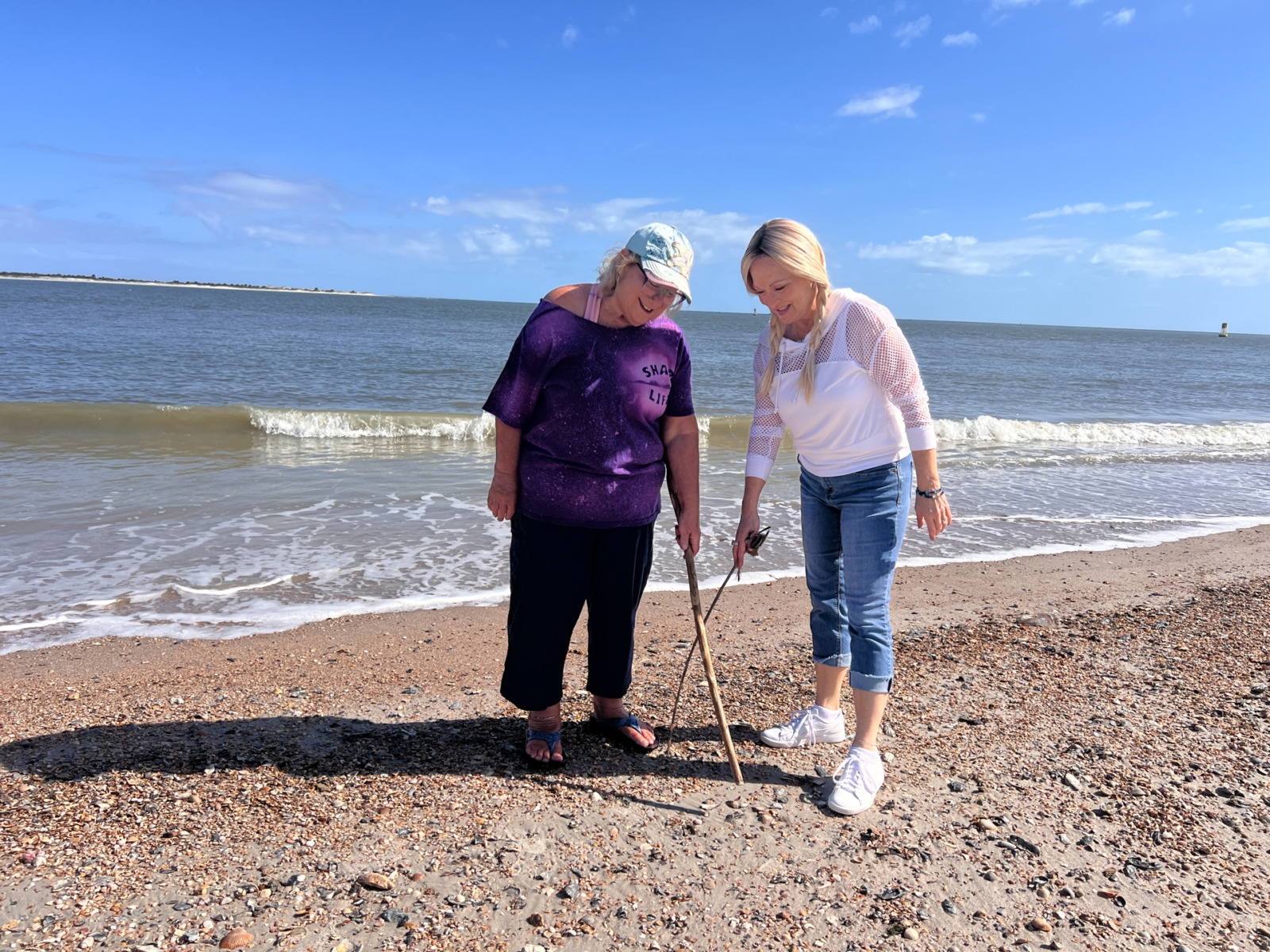
One of my favorite things about walking along a Florida beach is never knowing what I might find.
Beautiful seashells are the obvious treasures, but depending on where you are, you might also discover sand dollars, pieces of coral, interesting driftwood and even prehistoric shark teeth.
Florida has more than 1,300 miles of coastline, and different beaches offer completely different beachcombing experiences. Some are legendary for the sheer number and variety of shells that wash ashore. Others are known for shark teeth or unusual treasures brought in by tides and currents.
While filming Love Eat Travel with Michelle Valentine, I’ve had the opportunity to experience another side of Florida beachcombing firsthand. On Amelia Island, I searched the shoreline for prehistoric shark teeth near Fort Clinch. And in Southwest Florida, our Season 2 travels took us to Marco Island, already one of Florida’s well-known destinations for shelling.
Whether you’re a serious shell collector or simply someone who can’t resist looking down while walking along the beach, here are some of the best Florida beaches for seashells, shark teeth and beachcombing.
Sanibel Island
Sanibel Island has long been one of Florida’s most famous destinations for seashell collectors.
The island’s unusual east-west orientation helps it catch shells carried toward shore by Gulf currents. As a result, beachgoers can find an impressive variety of shells along its coastline.
In fact, searching the sand is such a popular pastime here that bending over to inspect shells has affectionately become known as the “Sanibel Stoop.”
Bowman’s Beach, Lighthouse Beach and the area around Blind Pass are among the island’s popular shelling locations.
Shelling conditions can vary dramatically from day to day. Tides, winds and storms all affect what washes ashore, so don’t assume a quiet shelling day means you’ve chosen the wrong beach.
Sometimes timing is everything.
Captiva Island
Just north of Sanibel, Captiva Island offers another wonderful opportunity for shell collectors.
Its beaches can produce conchs, cockles, scallops and other Gulf Coast shells, and searching for them is an easy activity to incorporate into a relaxing beach vacation.
Turner Beach near Blind Pass is particularly popular with beachcombers.
One of the joys of shelling on Captiva and Sanibel is that you don’t necessarily need elaborate equipment.
A small shell bag and a willingness to walk slowly and look carefully can be enough to turn an ordinary beach stroll into a treasure hunt.
Marco Island
Marco Island in Southwest Florida combines beautiful Gulf beaches with excellent opportunities for beachcombing.
Shell hunters may find a variety of treasures along the shoreline, including whelks, conchs and other shells deposited by Gulf waters.
Tigertail Beach and South Marco Beach are two popular places to begin exploring.
Marco Island also became much more personal to me when we traveled to Florida’s Paradise Coast to film Season 2 of Love Eat Travel with Michelle Valentine.
Our time there gave me an opportunity to experience the area’s beaches, waterways, wildlife, history and coastal culture beyond simply reading about them as travel destinations.
I’ll be sharing much more from those experiences throughout my Florida travel stories.
Explore Florida’s Paradise Coast with Love Eat Travel with Michelle Valentine.
Venice Beach
If you’re hoping to find something considerably older than a seashell, head to Venice on Florida’s Gulf Coast.
The area is famous for prehistoric shark teeth that wash ashore, earning Venice the nickname “Shark Tooth Capital of the World.”
Caspersen Beach is particularly well known among shark-tooth hunters.
Look carefully among the shells and darker pieces of material along the shoreline. Once you begin recognizing the distinctive shapes and colors of fossilized shark teeth, searching for them can become surprisingly addictive.
And shark teeth aren’t the only reason to look down.
Scallops, whelks, clams and other shells can also be found along beaches in the Venice area.
Amelia Island
My own shark-tooth hunting adventure took place on the opposite side of Florida.
While filming Season 2 of Love Eat Travel with Michelle Valentine on Amelia Island, I joined Shark Tooth Adventures for a guided search along the beach near historic Fort Clinch.
This wasn’t simply another walk on the beach.
I was searching for prehistoric treasures.
Searching for Shark Teeth Near Fort Clinch
At first glance, you’re looking at sand, shells and all the little bits and pieces that naturally collect along a shoreline. Then you start learning what to look for. Suddenly, every little dark shape catches your attention.
Could that be one?
Searching with someone who knew what to look for helped me realize how easily I could have walked directly past a shark tooth without ever recognizing it. That’s part of what makes shark-tooth hunting such a fun form of beachcombing. Finding one feels like discovering a tiny secret hiding among thousands of ordinary objects along the beach.
And unlike visiting a museum where fossils have already been found, identified and displayed, you’re doing the searching yourself. That little element of discovery changes the experience.
A Different Kind of Florida Beach Treasure
We usually associate Florida beachcombing with beautiful shells. Amelia Island reminded me that some of the most interesting things along Florida’s coastline aren’t necessarily the prettiest or most colorful.
A small fossilized shark tooth may not immediately catch your eye the way a beautiful shell does, but think about what you’re holding. It’s a piece of prehistoric life.
That realization made our shark-tooth hunt one of my memorable experiences while filming on Amelia Island.
Explore my Amelia Island, Florida episode of Love Eat Travel with Michelle Valentine.
If prehistoric discoveries fascinate you too, read my guide to the best places to see dinosaur bones and prehistoric fossils, where I share more about my fossil-hunting experiences in Florida.
Clearwater Beach
Clearwater Beach is better known for its broad stretch of white sand and beautiful Gulf sunsets than for serious shell collecting, but beachcombers can still make interesting finds.
I’ve enjoyed Clearwater Beach myself, including a visit with my mom. Sometimes the best beach memories aren’t about what you find in the sand at all, but simply who you’re sharing the day with.
Scallops, cockles and other shells can wash ashore in the Clearwater area.
Nearby Sand Key and Caladesi Island can also appeal to travelers who enjoy combining a Florida beach day with a little shell searching.
As with most Florida beaches, your results will depend on the conditions. A beach that looks picked over one afternoon may look completely different after the next tide.
When Is the Best Time to Look for Seashells?
There’s no guarantee when it comes to shelling, and that’s part of the fun. However, your chances can improve when you pay attention to natural conditions.
Low tide can expose areas of beach that were underwater only hours earlier. Early morning can also be a good time to search, especially at popular beaches before more visitors arrive. Storms and strong winds can sometimes deposit new shells and other objects along the shoreline, although you should never venture onto a beach during dangerous weather or ignore local warnings.
The best shelling isn’t always about arriving at a famous beach. Sometimes it’s simply about arriving at the right moment.
Look Along the Shell Line
If you’re new to beachcombing, don’t just wander randomly across the sand. Look for the line of shells, seaweed and other natural material left behind by the tide. Those areas can be particularly interesting because currents have already done some of the collecting for you.
Slow down.
Look closely.
And don’t assume the largest object will be the most interesting. My Amelia Island shark-tooth experience certainly taught me that.
Sometimes the treasure you’re looking for is tiny.
What Should You Bring for Beachcombing?
You don’t need much.
A small mesh bag can be useful for shells because sand can fall through it rather than collecting at the bottom.
Wear comfortable shoes if the shoreline is covered with broken shells, and bring the usual Florida beach essentials: sunscreen, water, sunglasses and a hat.
If you’re specifically hunting for shark teeth, patience may be the most important thing you bring.
Once you learn what you’re looking for, the search itself becomes part of the experience.
Can You Keep the Seashells You Find?
Don’t assume that everything you find on a Florida beach should come home with you.
Rules can vary by location, and some parks, preserves and protected areas restrict collecting.
Living shells should be left where you find them.
If there’s an animal living inside a shell, that shell isn’t a souvenir. It’s a home.
The same principle applies to other natural objects you encounter while traveling. Beaches and coastal environments are ecosystems, not gift shops.
Before collecting anything, check the rules for the specific beach, park or protected area you’re visiting.
And when in doubt, leave it where you found it.
Learn more about Leave No Trace principles and responsible outdoor travel.
Don’t Forget to Look Up
There’s a funny thing about shelling and shark-tooth hunting. You can become so focused on what’s beneath your feet that you forget where you are.
Every once in a while, stop searching and look around. You’re standing on a Florida beach.
Watch the waves. Look for shorebirds. Notice the changing colors of the water. Enjoy the breeze.
Finding a beautiful shell or prehistoric shark tooth is exciting, but it doesn’t have to be the only reason you enjoyed the walk.
Some of my favorite travel experiences happen when I’m not rushing toward the next attraction. I’m simply paying attention to where I am.
Florida Beachcombing Is About the Search
You don’t have to find the perfect shell to have a successful day of beachcombing. That’s not really the point.
Part of the fun is walking, looking and wondering what the next wave might uncover. Maybe you’ll find an intricate shell on Sanibel Island. Maybe you’ll spot something interesting along Marco Island. Maybe you’ll uncover a prehistoric shark tooth in Venice. Or perhaps, like I did on Amelia Island, you’ll discover that something you’ve walked past on beaches countless times suddenly becomes fascinating once you know what you’re looking for.
Florida’s coastline is constantly changing. Every tide brings something different. And that’s a pretty good reason to keep looking down.



Leave A Comment